Etna Ash and Catania Airport Closures: A Contingency Guide
After Etna ash closed Catania Airport for three days in late September, here is how diversions to Palermo, Comiso and Trapani work and how to plan for them.
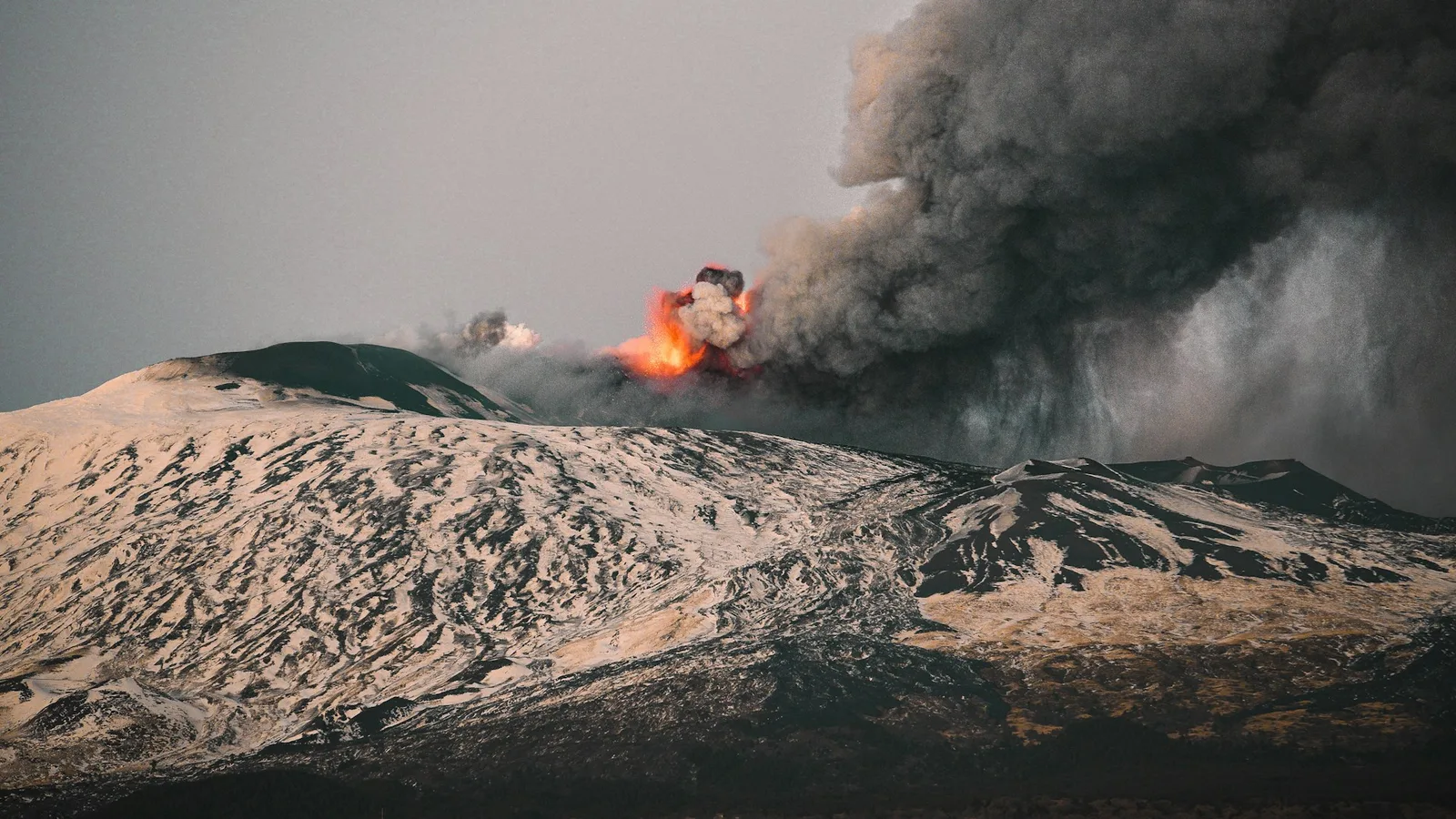
Catania Airport was closed for three days at the end of September because of ash from Mount Etna, reopened on the evening of Monday 28 September, and was briefly suspended again the following morning. For anyone flying into eastern Sicily this autumn, the practical question is no longer whether the volcano can affect a trip, but what to do on the ground when it does.
This guide sets out what happened, how closures are decided, where diverted flights actually land, and how to build an itinerary that survives a change of airport.
What happened in late September
According to Italian press reports, flights at Catania Fontanarossa were suspended from Saturday 26 September as ash from Etna's summit drifted over the airport. The suspension was extended several times, and the airport operator SAC announced the resumption of flights on Monday 28 September at around 8 pm, once the alert was lifted.
On Tuesday 29 September a new emission, reported as coming from the North-East crater with an ash column of about four kilometres, moved south towards the airport. Operations were suspended again at around 9:30 am and restored shortly afterwards, when the wind shifted. Local reporting counted between 12 and 18 diverted flights and several cancellations for that single morning.
This was not an isolated episode. The airport was also closed from 14 September, and in August repeated red alerts affected roughly 700 flights between cancellations and diversions, including the Ferragosto period. At the time of writing the airport is reported as operational, but the pattern of this summer suggests that travellers should treat a stop-and-go day as a realistic scenario and verify the flight status with the airline before leaving for the airport.
How a closure is decided
Volcanic ash is abrasive, and it can melt inside a jet engine and damage it. For this reason the decision is never left to a single observer. The Istituto Nazionale di Geofisica e Vulcanologia (INGV) issues aviation colour codes for Etna; the civil aviation authority ENAC then coordinates the air navigation provider, the Italian Air Force and SAC.
Two details matter for travellers:
- A red alert does not automatically mean a full closure. The airspace around Catania is divided into sectors, which are closed and reopened according to where the wind is carrying the ash.
- Reopening times are provisional. During the last closure the deadline was moved several times over three days, so an announced time should be read as the earliest possible restart, not as a commitment.
Even after the airspace reopens, ash on the runway and aprons has to be cleared, and the first hours are taken up by repositioned aircraft and delayed rotations.
Where diverted flights land
When Catania Airport is closed, arriving flights are either cancelled or sent to one of three other Sicilian airports. The airline makes this decision, often while the aircraft is already airborne, and the choice depends on slots and handling capacity on the day.
Palermo
Palermo Falcone e Borsellino received most of the diversions on 29 September. It is the largest alternative, but also the furthest from the east coast: about 240 km from Catania, mostly on the A19 motorway. In normal traffic, allow approximately two and a half to three hours to Catania, and a little over three hours to Taormina or Syracuse. Roadworks on the A19 are frequent, so these figures are estimates.
Comiso
Comiso is the closest alternative, in the province of Ragusa. On 29 September it handled flights from Rome Fiumicino and Milan Linate. By private car it is approximately one hour and a quarter to Catania, around one hour and a half to Syracuse, and about an hour to Noto and the Baroque towns. For guests staying in the Val di Noto, a diversion to Comiso can actually shorten the final transfer.
Trapani
Trapani Birgi, on the western tip of the island, took flights from Malta and Barcelona during the same morning. It is the most demanding option for eastern Sicily: allow approximately three and a half hours to Catania and around four to Taormina, in normal traffic.
Planning an itinerary that survives a diversion
A few decisions made before departure reduce most of the risk.
- Leave a margin on the first day. Avoid booking a fixed appointment, a wedding rehearsal or a restaurant with a strict seating within a few hours of landing in Catania.
- Be careful with the last day. A departure from Catania on the morning of an onward long-haul connection is the most exposed point of any itinerary. If the connection is important, consider spending the final night in a position that keeps Palermo or Comiso within reach, or allow a buffer day.
- Consider flying into Palermo by choice. For a first stay in Taormina or on the east coast, arriving in Palermo and crossing the island with a stop in Cefalù or Enna turns the transfer into part of the trip. The route is described in our Palermo Airport to Taormina page.
- Check the airline's position. Volcanic ash is generally treated as an extraordinary circumstance, which normally excludes cash compensation, while the right to rebooking and assistance remains. Conditions vary, so verify with the airline and with your travel insurance before travel.
- Keep one contact for ground transport. When a flight is diverted, the useful information is the new airport and the new landing time. A single operator who already holds the booking can move the car without the passenger having to start again from the arrivals hall.
On the ground during a closure day
When several flights are diverted to the same airport within an hour, arrivals halls at Palermo and Comiso become crowded and unplanned transport is difficult to find. The roads, by contrast, remain normal: the A19 between Palermo and Catania and the A18 along the Ionian coast are not affected by ash restrictions on airspace.
Ash fall on the ground is a separate matter. In the towns on Etna's slopes and sometimes in Catania itself, municipalities may impose temporary speed limits or restrictions on two-wheeled vehicles while the roads are cleaned. These ordinances are local and short-lived, so verify them on the day.
Finally, the destination itself is usually untouched. Taormina, Syracuse and Ortigia, Noto and the coast remain fully open during these episodes. Excursions to the upper slopes of Etna follow their own rules, set by the authorities according to the activity level, and should be confirmed with a licensed guide shortly before the visit.
Departures: the reverse problem
For departing passengers the sequence is inverted. If Catania is closed, the airline may cancel the flight, delay it, or operate it from another airport. In the last case, passengers need to reach Palermo or Comiso at short notice. The only reliable approach is to monitor the airline's messages from the evening before, keep luggage ready, and have a car that can leave early and change destination. An hourly chauffeur arrangement on the day of departure offers this flexibility better than a fixed point-to-point booking.
Travelling with GIORIZZ
GIORIZZ tracks every booked flight, so when an arrival is diverted from Catania to Palermo, Comiso or Trapani, the chauffeur is reassigned to the new airport and the meet and greet takes place there. Our own chauffeurs and Mercedes-Benz fleet operate across the whole of Sicily, with English spoken on every service and direct knowledge of the motorways, the ZTL zones and the real driving times between airports and hotels.
Request a quote or explore our Catania Airport transfers and Palermo Airport transfers.
Stay Informed
Receive destination guides, travel insights, and curated stories from the world of premium mobility.